Could your self-worth be limiting your net worth?
I want you to think about that for a minute.
Because you can be a hardworking, intelligent, successful woman who loves Jesus, earns a good income, and still struggle to believe you're capable of building wealth.
You can be incredibly generous with other people and struggle to invest in yourself.
You can manage a business, a household, and everybody else's needs, but feel completely overwhelmed when it's time to make decisions about your own money.
And sometimes, the biggest thing standing between you and financial confidence isn't your income.
It's what you believe about yourself.
Today, we're talking about something that's at the very heart of why I do what I do.
Knowing your worth and growing God's wealth.
Because I believe that when a woman understands who she is, what she's capable of, and what God has entrusted to her, she begins making very different decisions about her life and her money.
And I know that because I've lived it.
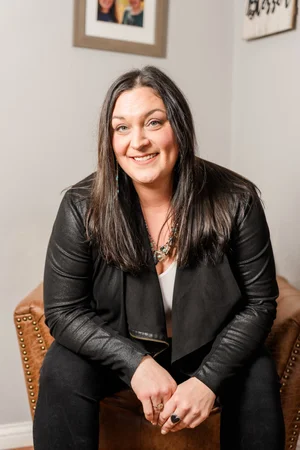
I'm Tiffany Miliander, and this is Blessed Beyond the Stress, where Christian women come to know their worth, grow their wealth, and live with greater clarity and confidence.
Before I Could Grow My Wealth, I Had to Recognize My Worth
There was a season in my life when I was trying to rebuild just about everything.
I had gone through a divorce.
I was a single mom.
I had a home to maintain, a daughter to raise, bills to pay, and a financial future that felt like an enormous responsibility.
I was doing what needed to be done.
But there's a difference between doing what needs to be done and believing that you're worthy of something better.
And for a long time, I struggled with that.
I had spent so much of my life in survival mode.
When you're constantly focused on getting through the next difficult thing, you don't always stop to consider what you actually want your life to become.
You're just trying to make it through.
And I remember one particular day at church.
We were singing the song Who You Say I Am by Hillsong Worship.
And I just broke down.
I was standing there, singing, and I felt God reminding me of something that I desperately needed to understand.
I was His child.
I was loved.
Not because of what I had accomplished.
Not because I had everything figured out.
Not because I was doing a perfect job of holding my life together.
I was loved because I belonged to Him.
And I can't fully explain to you what that moment meant to me.
But something began changing in the way I saw myself.
I started recognizing that I was worthy of being loved.
Worthy of being cared for.
And that included the way I cared for myself.
Now, I didn't walk out of church that day with a perfect financial plan.
My debt didn't disappear.
My circumstances didn't suddenly change.
But my understanding of who I was began to change.
And that mattered.
Because when I started believing I was worthy of being cared for, I began taking greater responsibility for the life I was creating.
Including my financial life.
Your Worth and Your Net Worth Are Two Different Things
This is something I want every woman listening to understand.
Your net worth is a financial measurement. Your self-worth is not.
Your net worth can change.
Your income can increase or decrease.
Your business can have an incredible year followed by a really difficult one.
You can make a financial mistake.
You can lose a job.
You can find yourself starting over.
But none of those things changes your value as a person.
And as Christian women, I believe we have an even deeper reason to understand that distinction.
Genesis 1:27 tells us that God created mankind in His image.
Our value doesn't begin with our productivity, our possessions, or the balance in our bank accounts.
It begins with who created us.
But here's where I think we sometimes get confused.
We know we're supposed to find our identity in Christ.
And yet we still allow our financial circumstances to determine how capable, successful, or valuable we feel.
When our business is doing well, we feel confident.
When money is tight, we question ourselves.
When someone else seems further ahead, we wonder what we're doing wrong.
And suddenly our financial circumstances are doing a job they were never meant to do.
They're determining how we see ourselves.
I don't want that for you.
I want you to understand that your worth is already established.
And from that place, you can begin learning how to build wealth.
Not to prove your value.
But to steward your resources, support your family, create opportunities, and make a meaningful difference in the world around you.
What You Believe About Yourself Affects Your Financial Decisions
Now, let's make this practical.
Because self-worth isn't just a nice thing to talk about.
It can influence the decisions you make every single day.
Think about a woman who owns a business.
She's talented.
She works hard.
Her clients love what she does.
But every time she needs to raise her prices, she hesitates.
She's worried people won't think she's worth it.
So she keeps undercharging, working longer hours, and telling herself that someday she'll feel confident enough to charge appropriately.
Or think about the woman who wants to start investing.
She's interested.
She knows building wealth matters.
But she keeps telling herself she's not good with money.
So she avoids learning about it.
She leaves decisions to someone else.
And years go by without her taking that first step.
Or maybe it's the woman who earns a great income but feels guilty spending money on something she enjoys.
She's perfectly comfortable spending money on her family.
But when it comes to herself?
She questions whether she deserves it.
Now, I want to be clear.
Not every financial struggle comes from low self-worth.
Sometimes income genuinely isn't enough.
Sometimes life brings circumstances we couldn't have prepared for.
And sometimes we simply haven't been taught how to manage money well.
But our beliefs can influence what we do with the resources and opportunities we have.
And that's why I spend so much time talking about mindset in my financial coaching.
Because you can have all the financial information in the world, but if you don't trust yourself to use it, you're going to struggle to move forward.
Financial Confidence Is Something You Build
I want to tell you something that might surprise you.
You don't have to feel confident before you start making confident financial decisions.
Confidence often grows because you start making decisions, learning from them, and seeing what you're capable of.
When I was paying off my debt, I didn't have some extraordinary income.
I was raising my daughter, managing my responsibilities, and learning to make intentional choices.
Over four years, I paid off approximately $64,000 in debt.
And I didn't accomplish that because I suddenly became a different person.
I learned.
I made plans.
I adjusted when things didn't work.
I kept going.
And with every step, I was building evidence that I could manage my money differently.
That I could make decisions.
That I could follow through.
That I could create something more secure for myself and my daughter.
That's how confidence grows.
Not through perfection.
Through practice.
And I want you to experience that too.
You Don't Have to Figure This Out Alone
Now, I know some of you are listening and thinking:
Tiffany, I know I should feel more confident with money. I have a good income. I'm successful in other areas of my life. So why do I still feel so overwhelmed when it comes to my finances?
And I want you to know that's exactly the kind of thing we work through in my 3-Day Money Makeover Challenge.
Because we're not just looking at a budget and telling you to spend less.
We're looking at your relationship with money.
What you believe about yourself.
The habits that have developed around those beliefs.
And how to begin making financial decisions with greater clarity and confidence.
On the first day, we start with clarity.
On the second day, we examine the stories we've been telling ourselves about money and begin challenging the ones that aren't serving us.
And on the third day, we start putting that understanding into action.
Because I don't want you dependent on somebody else to tell you what to do with every dollar.
I want to teach you how to confidently decide what to do with your own money.
If that sounds like something you need, I would love to have you join us.
You'll find the link to the Money Makeover Challenge below.
Now, let's talk about the other half of today's message.
Because knowing your worth is important.
But I also want you to grow your wealth.
Growing God's Wealth Is About Stewardship
One of the most important shifts I've made in the way I think about money is understanding the difference between ownership and stewardship.
As Christians, we believe that what we have ultimately comes from God.
Our time.
Our talents.
Our opportunities.
And yes, our financial resources.
Psalm 24:1 reminds us that the earth and everything in it belong to the Lord.
So when I talk about growing God's wealth, I'm talking about learning to faithfully manage and grow the resources He has entrusted to us.
And I want to challenge something here.
Being a good steward doesn't mean you have to stay financially small.
It doesn't mean you're more faithful because you struggle.
And it doesn't mean that wanting to build wealth makes you greedy.
Money is a tool.
It can be used wisely or unwisely.
It can support meaningful goals, or it can become something we chase at the expense of everything else.
The important question isn't simply how much money you have.
It's what you're doing with what has been placed in your hands.
Are you using it intentionally?
Are you preparing for the future?
Are you making decisions that support your family and your values?
Are you creating opportunities to be generous?
Are you learning how to grow what you've been given?
Because I believe faithful stewardship includes more than simply avoiding financial mistakes.
It includes being intentional about what we're building.
Look at the Woman in Proverbs 31
I love the example of the woman described in Proverbs 31.
And one of the reasons I love her is because she's not just sitting around waiting for somebody else to make financial decisions for her.
She's capable.
She's resourceful.
She's thoughtful about her household.
And she's involved in economic activity.
Proverbs 31:16 tells us:
“She considers a field and buys it; out of her earnings she plants a vineyard.”
I want you to notice that.
She considers the opportunity.
She makes a decision.
She uses her resources to create something.
That's strategy.
She's not simply reacting to whatever happens around her.
She's thinking about what she has, what she can do with it, and what she wants to build.
And later, in verse 25, we read:
“She is clothed with strength and dignity; she can laugh at the days to come.”
Now, I don't read that as a promise that she'll never experience hardship.
I see a picture of a woman who is capable, prepared, and rooted in something deeper than her circumstances.
And that's what I want for you.
I want you to have the knowledge and confidence to consider an opportunity.
To understand your options.
To make a thoughtful decision.
And to trust that you can learn what you don't already know.
You don't need to know everything today.
But you are capable of learning.
Knowing Your Worth Changes How You Build Wealth
So how do we bring these two ideas together?
I want you to begin thinking about your money decisions through three questions.
First: Am I making this decision from fear or from clarity?
Sometimes fear causes us to avoid our finances altogether.
Other times it causes us to hold so tightly to money that we struggle to enjoy it or use it for anything meaningful.
Before you make a decision, give yourself an opportunity to understand what's actually happening.
Look at the numbers.
Consider your priorities.
Get the information you need.
Second: Does this decision reflect what I truly value?
You have heard me talk about this before.
I don't believe the purpose of managing money well is to create a life where you never spend anything.
I want you to use your money to build a life you actually want to live.
That includes security.
It includes experiences and opportunities.
It includes preparing for your future.
And it includes generosity.
But those things don't happen automatically.
You have to decide what matters and make room for it in your financial plan.
Third: Am I willing to learn and take responsibility for my next step?
You might not understand investing yet.
You might need to learn how to price your services.
You might need to get more comfortable looking at your bank accounts.
You might need to have a conversation about money that you've been avoiding.
That's okay.
You can learn.
You can ask questions.
You can seek wise counsel.
And you can begin taking ownership of your financial decisions.
Not because you have to do everything alone.
But because you are capable of becoming an active, confident steward of what God has entrusted to you.
What Becomes Possible When You Know Your Worth?
I want to come back to that woman I was in church years ago.
The one who was standing there crying because she was beginning to understand that she was loved.
That her worth wasn't something she had to earn.
I think about everything that has happened since then.
The debt I paid off.
The financial security I began building.
The businesses I created.
The opportunities I've been able to pursue.
And the people I've been able to help.
But when I look back, the most important change wasn't a number in my bank account.
It was learning to see myself differently.
Because that changed what I believed was possible for my life.
And then I had to do the work.
I had to learn how to manage money.
I had to make difficult decisions.
I had to build new habits.
I had to become more intentional.
And I still do.
That's why I don't teach women that knowing their worth is somehow going to make them wealthy overnight.
That's not how this works.
Knowing your worth doesn't replace financial responsibility. It gives you a stronger foundation from which to practice it.
And I want you to have both.
I want you to know that you are worthy of financial peace.
That you are capable of learning how to build wealth.
And that you are called to steward what God has placed in your hands.
Worthy. Capable. Called.
Those aren't just encouraging words to me.
They're the foundation of the work I do with women.
Because when you begin seeing yourself that way, you can stop using money to measure your value and start using it to create something meaningful.
Becoming Financially Unshakeable
At the beginning of this video, I asked you:
Could your self-worth be limiting your net worth?
And I hope you can see now why I asked.
Not because your bank balance reveals how much you value yourself.
And certainly not because being wealthy makes you more worthy.
But because what you believe about yourself can influence the opportunities you pursue, the decisions you make, and the way you steward your resources.
I want you to know your worth.
And I want you to grow your wealth.
I want you to build a financial foundation that supports the life you want to live.
A life with margin.
Margin to breathe.
Margin to make thoughtful decisions.
Margin to pursue opportunities.
Margin to enjoy what you've worked for.
And margin to be generous.
That's what becoming Financially Unshakeable means to me.
And if you're ready to begin building that kind of financial confidence, I want to invite you into my 3-Day Money Makeover Challenge.
You don't need to have it all figured out before you join.
You just need to be willing to look at where you are, challenge what's keeping you stuck, and begin making intentional decisions about where you want to go.