What if you're closer to financial freedom than you think?
When you hear the words financial freedom, what comes to mind?
Maybe it's being completely debt-free.
Maybe it's having enough money that you never have to work again.
Or maybe it's a beautiful house, vacations whenever you want, and a bank account with more zeros than you have now.
What if it's something you can begin experiencing while you're still building your financial future?
Today, I want to talk about what financial freedom really looks like: peace, margin, choices, generosity, and the ability to live a life that reflects what matters most to you.
And I want to share a personal story about a moment when I realized that the financial security I'd been building had become something much more meaningful than money in the bank.
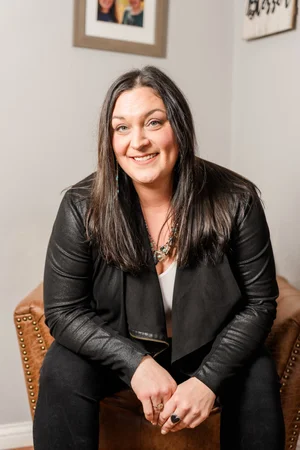
I'm Tiffany, and this is Blessed Beyond the Stress, where Christian women come to know their worth, grow their wealth, and live with greater clarity and confidence.
I think one of the biggest misconceptions about financial freedom is that it has to be tied to a specific number.
When I have $1 Million saved, then I'll feel free.
When my mortgage is paid off, then I'll have peace.
And those can all be wonderful financial goals.
But here's the problem with believing that freedom only comes when you reach a certain number.
You get to that number or goal and realize it didn’t really change how you feel.
You pay off one debt, but now you're thinking about everything else you need to accomplish.
And before you know it, you've spent years working toward financial freedom without ever allowing yourself to experience any of it.
I don't want that for you.
I want you to build wealth and reach your goals.
But I also want you to understand what you're building that security for.
Because money is a tool.
It's not a measure of your worth, and it's not the ultimate measure of your success.
And if we never stop to define what we actually want money to make possible, we can end up chasing more without knowing what more is supposed to give us.
So let me share what financial freedom has come to mean to me.
The first thing is peace.
And I don't mean a life where nothing ever goes wrong financially.
I mean being able to face a financial situation without immediately feeling like everything is falling apart.
I grew up surrounded by financial instability.
And for a long time, my relationship with money was shaped by the fear of not having enough.
I worked hard, saved what I could, and tried to stay in control of every financial detail because I thought that was how I could keep myself safe.
Then, after my first marriage ended, I found myself facing $64,000 in debt.
I had to rebuild.
And as I've shared before, it took me five years to pay off that debt as a single mom with an irregular income.
But something changed during those five years.
As I started making progress, paying off balances, and building financial stability, I began to experience a kind of peace I hadn't known before.
I knew what my bills were.
I knew where my money was going.
I had a plan.
And I could see that the decisions I was making were actually changing my life.
I wasn't completely debt-free yet.
But I wasn't living in the same level of financial uncertainty anymore, either.
And that mattered.
Now, peace doesn't mean you'll never worry about money again.
We're human. Unexpected things happen.
But there's a big difference between facing a financial challenge with a plan and facing one without knowing where to begin.
Financial peace is knowing that you can face what's in front of you and make a thoughtful decision about what comes next.
And that's something you can start building long before you reach every financial goal.
The second thing financial freedom looks like is margin.
And I love this word because it describes something so many women are missing.
Room.
Room in your budget.
Room in your schedule.
Room to make a decision without feeling like every single dollar is already spoken for.
I remember how different life began to feel when I wasn't constantly struggling to make the bills work.
There was room to breathe.
And here's something I want you to understand.
Margin doesn't always mean having a huge amount of extra money.
Sometimes it begins with having a little money set aside so an unexpected expense doesn't immediately go on a credit card.
Sometimes it means paying off a monthly payment so you have more flexibility in your budget.
Sometimes it means planning ahead for something you know is coming instead of scrambling to figure out how to pay for it.
That's why I teach women to build a Safety Fund.
Not because having money saved guarantees that nothing difficult will happen.
But because it gives you options when something does.
And I've experienced that myself.
When we had an unexpected septic-system expense, I had the money available to handle it.
Did I want to spend money on a septic system?
Absolutely not!
I remember thinking, "I just don't want to spend my money on shit. Literally!"
But here's the difference.
I could be annoyed about the expense without it becoming a financial crisis.
And that's freedom!
Not glamorous.
Not something you're going to see someone celebrating on social media.
But incredibly valuable in everyday life.
Financial margin means life's unexpected expenses don't automatically have to become emergencies.
And as you build more margin, you begin creating more room for the things you actually want to do with your life.
The third thing is choices.
And this one is especially meaningful to me.
Because when you don't have financial margin, sometimes it feels like life is making all your decisions for you.
You take whatever opportunity is available because you need the money.
You say no to experiences because you can't afford them.
You stay stuck in situations because you don't see another option.
And I know what that feels like.
But one of the things I discovered while paying off debt was that I didn't have to put my entire life on hold until every balance reached zero.
I could make intentional choices about what mattered most.
One of my favorite examples is the trip I took with Caydence to Yellowstone.
At the time, I was still working on paying off my debt.
I was self-employed, which meant that taking time away from work also meant not earning money during that time.
But making memories with my daughter was important to me.
So I planned for it.
I saved $750 for the trip.
I made sure the bills were taken care of and our lodging was paid for.
We packed coolers with food and snacks.
We stayed in a basic cabin at a KOA campground near Livingston, Montana.
And we spent our days exploring Yellowstone, hiking, watching wildlife, and making memories together.
Was it a luxury vacation?
No!
But it was exactly the kind of adventure I wanted to share with my daughter.
And I didn't have to come home with a bunch of new debt to pay for it.
That experience taught me something important.
Financial freedom isn't always about being able to afford everything. Sometimes it's about being able to afford what matters most to you.
I didn't need to have everything.
I needed to know what I valued, make a plan, and use my money accordingly.
And that's the kind of freedom I want you to experience.
The ability to say yes to something meaningful because you've prepared for it.
And the confidence to say no to something else because it doesn't fit your priorities.
Freedom is having choices—and knowing how to make them.
Now, the fourth thing is one that has become incredibly meaningful in my life.
Generosity.
And I want to share a story that still touches my heart.
Years ago, when I was going through my own divorce, I knew what it felt like to be the woman leaving a difficult marriage.
I knew how overwhelming that experience could be, especially when finances were already a concern.
And I remember wishing I had more support.
Years later, a dear friend of mine was leaving an abusive marriage.
She needed legal representation.
And I was in a different financial position than I'd been in years earlier.
I had worked hard to build financial stability.
I had created margin.
And when I saw what she was facing, I was able to help her pay half of her legal retainer.
I want you to understand why that moment mattered so much to me.
I didn't do it because I had endless amounts of money.
I did it because I knew how much I wished I'd had that kind of support when I was going through my own situation.
Years earlier, when I was the woman leaving, I couldn't do it for myself or anyone else.
This time… I could.
And that is one of the reasons I want women to build wealth.
Not just so they can have more.
But so they can do more with what they have.
So they can help someone when they see a need.
So they can support causes they care about.
So they can be generous without putting their own financial security at risk.
Because generosity looks different when it comes from a place of financial margin instead of financial pressure.
And I think that's a beautiful expression of stewardship.
One of the things I want to challenge you to think about is this:
Are you building a life around your money, or are you building your money around the life you want to live?
Because those are two very different approaches.
I don't believe God calls us to make money the center of our lives.
But I also don't believe that means we should avoid building wealth or feel guilty for wanting financial freedom.
God knows we have desires on our hearts, and he created us in his image.
He has given us our resources and Money is a resource.
When we manage it wisely, it can support the things that matter to us.
It can help us provide for our families.
Prepare for the future.
Experience new things.
Create opportunities.
And bless other people.
First Timothy 6:17 reminds us not to put our hope in wealth, but in God, who provides for us to enjoy what He gives.
I love that reminder.
Because it brings together two things that sometimes get separated in conversations about faith and finances.
We're not supposed to put our trust in money.
But that doesn't mean we can't enjoy the resources we've been given.
And it doesn't mean we shouldn't manage them responsibly.
In fact, I believe those things belong together.
We can be wise with money, build wealth, enjoy life, and be generous—all while keeping God at the center.
And that's the kind of financial freedom I want to help women create.
That's why I created my 3-Day Money Makeover Challenge.
We start by getting clarity on where you are financially, looking at the habits and beliefs that may be keeping you stuck, and creating a plan that helps you begin moving toward the life you actually want.
Because you can't build meaningful financial freedom if you don't know what you're working toward.
If you're ready to take that first step, I'd love to have you join me.
You can find the details in the description.
Now, I want to help you think about what financial freedom could look like in your own life.
Here's an exercise I want you to try.
Instead of starting with a dollar amount, start with your life.
Imagine that your finances were supporting your priorities instead of constantly competing with them.
What would be different?
Would you sleep better because you knew the bills were covered?
Would you have money set aside so a car repair didn't derail your month?
Would you have the freedom to take your family on a trip without going into debt?
Would you feel more comfortable giving to someone in need?
Would you be able to reduce your work hours, pursue a business idea, or invest in learning something new?
What would financial freedom actually make possible for you?
I want you to get specific.
Because "I want to be financially free" is a wonderful desire.
But "I want to have enough saved that an unexpected expense doesn't scare me" gives you something to work toward.
"I want to be able to take a family vacation every year without using credit cards" gives you a reason to plan.
"I want to be able to give generously when someone I love needs help" gives your financial goals a purpose beyond yourself.
And once you know what freedom looks like for you, you can start connecting your daily financial decisions to that bigger picture.
Maybe the next step is building your first $2,000 Safety Fund.
Maybe it's paying off one debt so you can free up a monthly payment.
Maybe it's finally creating a spending plan that includes the things you enjoy instead of only the bills you have to pay.
Or maybe it's learning how to invest so the money you're earning today can help support your future.
Your next step doesn't have to look like someone else's.
It needs to make sense for your life.
Something else I've learned is that financial freedom can look different in different seasons.
When I was a young single mom, freedom meant knowing I could pay the bills, keep a roof over our heads, and create a stable life for Caydence.
As I paid off debt, it began to mean having room for adventures and experiences.
As I built greater financial stability, it meant having the ability to help someone else in a meaningful way.
And as I've grown as a business owner, it has also meant being able to invest in myself, develop my skills, and pursue opportunities that align with the work I feel called to do.
I've invested in coaching and personal development because I want to keep growing.
And I want my financial decisions to support that growth.
That doesn't mean every investment is the right one or that every opportunity needs a yes.
It means having the clarity to evaluate those decisions and the financial foundation to make them responsibly.
And that's what I love about the journey toward becoming Financially Unshakeable.
You're not working toward one perfect moment when all your financial problems disappear.
You're building a foundation that gives you greater stability and flexibility as your life changes.
And I don't want you to miss the progress you're making because you're comparing your life to someone else's finish line.
So I want you to think about where you are today compared to where you were a year ago.
Or five years ago.
Maybe you've paid off a credit card.
Maybe you've started saving consistently for the first time.
Maybe you and your spouse are finally having productive conversations about money.
Maybe you've learned to spend on something you value without feeling guilty.
Or maybe you've simply stopped avoiding your finances and started looking at the numbers.
Those things matter.
They're not insignificant just because you haven't reached every goal yet.
I know how easy it is to focus on how far you still have to go.
But sometimes we need to recognize how far we've already come.
Because when I look back on my own journey, some of the most meaningful moments of financial freedom happened before I reached what I thought was the finish line.
They happened when I realized I could handle a financial challenge.
When I could take my daughter on an adventure.
When I had enough margin to make a choice instead of feeling trapped by my circumstances.
And when I could open my hands and help someone else.
Those moments didn't require me to be a millionaire.
They required me to be intentional with the resources I had.
So here's what I hope you take away from today's conversation.
Financial freedom isn't just about a number in your bank account.
It's about peace when life gets uncertain.
Margin when something unexpected happens.
Choices that allow you to live according to your values.
And generosity that allows you to make a difference in someone else's life.
It's about creating a financial foundation that supports the life you want to live.
And you don't have to wait until you're completely debt-free, earning six figures, or ready to retire to begin experiencing some of those things.
You can begin building that freedom with the decisions you're making today.
When you think about financial freedom, which matters most to you right now: peace, margin, choices, or generosity?
And if you're ready to begin creating a plan for your own version of financial freedom, I'd love to help you inside the Money Makeover Challenge.